

     |
|
 |
|
 |
|
 |
|
 |
|
Alternative Splice Site Predictor (ASSP)
Overview
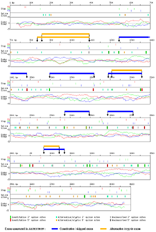
Figure 1. Sample output and internal exons retrieved from the
ALTEXTRON-database (not part of the prediction) [view]. |
ASSP is a sequence analysis tool for the prediction and classification of splice sites. It is based on an anlaysis of constitutive, skipped, cryptic, and alternative exon isoform splice sites (Wang and Marín, submitted), retrieved from the Altextron - database (Clark and Thanaraj 2002, Thanaraj et al. 2004, see definitions for splice site and exon nomenclature). This analysis revealed several features distinguishing alternative isoform and cryptic but not skipped splice sites from constitutive ones.
ASSP identifies putative splice sites using pre-processing models (position specific score matrices) and subsequently classifies them as either constitutive or alternative isoform/cryptic splice site using backpropagation networks (see model description), which combine several models and sequence statistics, such as position specific score matrices for the splice sites, GC content, oligonucleotide frequency models. Once the cutoff-value of the corresponding pre-processing model is surpassed, a splice site is labeled "real" and subsequently classified as "alternative isoform/cryptic" or "constitutive" by the corresponding neural network. For more information about cutoff values see evaluation.
The classification performance of ASSP, i.e. the distinction between constitutive or alternative isoform/cryptic splice sites, is 67.45 percent for acceptor sites and 71.23 percent for the donor sites (see evaluation for details). However, the percentage of correctly identified splice sites depends strongly on the score thresholds applied for the pre-processing models.
Exon identification is faciliated by the calculation of codon usage (log-likelyhood) for a variable window size, and the identification of stop codons for each reading frame. A sample output of ASSP is given in figure 1.
|
ASSP has been
developed at:
|
||
| Bioinformatics and Molecular Evolution Group | ||
| Departamento
de Genética Avenida de Reina Mercedes 6 Universidad de Sevilla 41012 Sevilla, Spain |
 |
|
| Mail: |  (Magnus Wang)
 |
|
 (Antonio Marín)
 |
||
References
ASSP:
Wang M., Marín A. 2006. Characterization and prediction of alternative splice sites. Gene 366:219-227.
Seqool
Seqool - A sequence analaysis tool. A software package for general sequence analysis and for building pattern recognition models for finding biological signals in DNA, RNA, or proteins. Available at http://www.biossc.de/seqool/index.html.
Altextron - database:
Clark F., Thanaraj T.A. 2002. Catergorization and characterization of transcript-confirmed constitutively and alternatively spliced introns and exons from human. Human Molecular Genetics 11: 451-464.
Thanaraj T.A., Stamm S., Clark F., Riethoven J.-J., Le Texier V., Muilu J. 2004. ASD: the Alternative Splicing Database. Nucleic Acids Res. 32 (Database issue): D64-D69.
 Top
Top |
 Back
Back |
Home • Overview • Prediction • Definitions • Evaluation • Software
Last Changes 10.01.2011